One morning, as he went to check on his goose, he noticed something unusual sitting in the nest — a bright, heavy, golden egg. At first, he doubted it. He thought it was some trick. He almost tossed it aside. But something held him back. He took it for evaluation, and to his shock, the egg was pure gold.
The farmer and the goose that laid golden eggs.
The next morning, the same thing happened. And the next. Day after day, the goose produced a golden egg. Slowly, the farmer’s life changed. His poverty faded. His confidence grew. His small farm started to feel like a miracle.
But as his wealth increased, so did his impatience. He grew tired of waiting for one egg each day. He wanted all the gold immediately. So he made a dangerous decision: he slaughtered the goose, hoping to find a pile of golden eggs inside.
When he opened it, the truth hit him. There were no golden eggs inside. And there was no goose anymore. He had destroyed the very source of his success.
In Stephen Covey’s book : The 7 Habits Of Highly Effective People, this is what he says…
Within this parable is a natural law — the real definition of effectiveness. (Which in the farmers context I’ll say profitability)
Many farmers think profitability means producing more. More output. More results. More action.
But the story shows a deeper truth: profitability is always a balance between what you produce (the eggs) and the capacity or asset that produces it (the goose).
If you chase results and ignore the source, you lose everything.
If you only protect the source and forget the goal, you will starve.
True success comes from managing both — production and production capacity — at the same time.
Let me know in the comments how you are managing production and production capacity on your farm.
Some lessons hit you in ways you never forget—this one came from chickens.
When I was growing up, I spent a lot of time around poultry farms. One morning, my dad decided to take us to see how different types of chicken farms operate.
We arrived at the broiler farm just as the sun was rising. The air was thick with the smell of feed and the soft hum of ventilation fans. Workers moved quickly, carrying the chickens from their pens toward the processing area. The birds scattered and squawked, jostling against one another. You could almost feel their fear—they knew what was coming. My dad led us aside before we saw anything more, but the lesson was already clear: these birds were being raised for a single, final payoff. Everything on the farm was geared toward one moment—the sale.
A few days later, my dad took us to a layer farm. The difference hit me immediately. The hens moved calmly, pecking at the feed, scratching the ground, and laying eggs day after day. The barn was quieter, the atmosphere almost peaceful. The farmer collected the eggs as they came, creating a steady, predictable flow of income. Unlike the broiler farm, success here didn’t depend on selling the birds—it depended on the output they produced consistently.
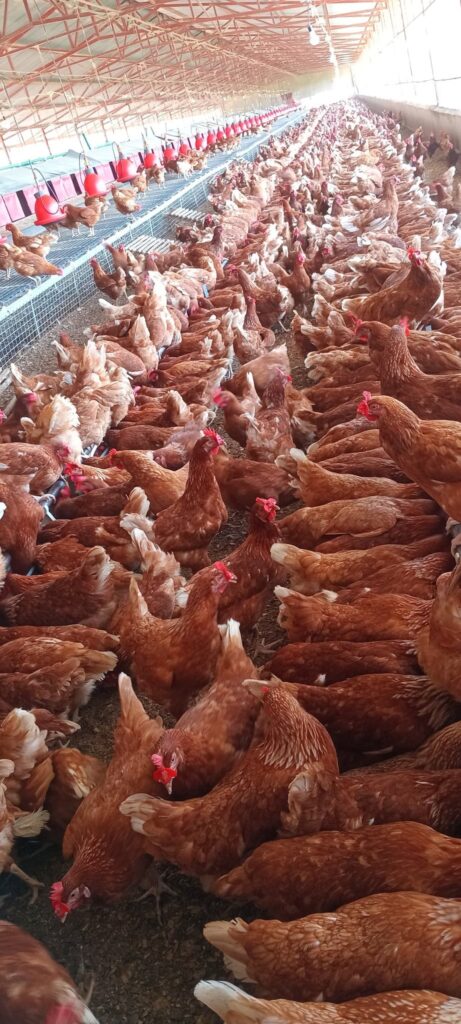
Layer Chicken in a poultry house.
My dad stopped and looked at me. “See the difference?” he asked. Both farms own valuable assets—the chickens—but they treat them in completely different ways.
The broiler farmer is like an investor chasing capital gains: the money comes only at the end, when the asset is sold.
The layer farmer is like an investor chasing cash flow: the asset produces money day after day, steadily and reliably.
Most people invest like broiler farmers—they wait for a single big payout and call it risky. The wiser approach is to think like the layer farmer and be the layer farmer: focus on cash flow, let your assets work for you every day, and build wealth steadily.
This is a fictional story inspired by the story of the cattle rancher and dairy farmer in Robert Kiyosaki’s book : Who Took My Money? Why Slow Investors Lose And Fast Money Wins.
I have been having a debate with myself for quite some time about whether I should choose day old chicks or just buy point of lay birds.
If you’re interested in layer poultry farming but you haven’t started yet, you’re more likely to face the same dilemma.
Should I buy day old chicks and raise them for about five months before I start earning, or should I buy point of lay birds and start making money next week?
And if you’ve been a follower of my Facebook and X (which I highly recommend you follow by the way… you’re missing a lot), you already know I prefer day old chicks to point of lay birds.
In this post, I’m going to show you why I chose day old chicks—not to convince you, but to show you my thought process. Hopefully, you’ll learn something from it.
1. Little Capital Required To Start
One day old layer chick costs around Ksh.150 right now(2025), while point of lay birds cost between Ksh.500–Ksh.1500, depending on age and seller. For me, day old chicks are a better option because they require less money to acquire the birds.
At first, I won’t have that much capital. Day old chicks give me a chance to start with a small budget and grow from there. This doesn’t include the cost of feeding for the 4.5 months, but at least I can start the poultry business with little money and buy more feed as I continue.
Let’s say I want to start with 100 birds.
🔴Day Old Chicks
✅Day Old Chicks cost 100 × 150 = Ksh.15,000
✅Each bird needs about 1.25kg in 8 weeks 100 birds × 2.5 = 250kg One 50kg bag = Ksh.4,000
Cost of 250kg
250 × 4000/50 = Ksh.20,000
Total = Ksh.35,000
🔴Point Of Lay
✅Point of lay birds cost
100 × Ksh.850 = Ksh.85,000
Total = Ksh.85,000
And that’s just the birds. I haven’t bought even one bag of feeds.
So you see the difference. A huge Ksh.50,000.
And this is before feeds. This is why day old chicks work for me—they let me start small as I continue finding money.
Caution: Make sure you have money to continue feeding your birds. If not, you’ll end up killing your chicks or selling them at a loss.
2.Learning Opportunity
A good number of people hate school, but this type of learning is different. And remember if you’re not learning, you’re dying.
Humans grow when they learn new things, and that’s exactly what day old chicks offer.
They give you a chance to learn how to:
– Prepare before receiving chicks – Brood correctly – Follow a vaccination schedule – Maintain strong biosecurity
You get to learn these for almost five months. Point of lay birds don’t give you this chance. They have already been brooded, most vaccines done, and all you get is a near-finished product.
Where is the fun in being handed success on a silver platter?
The amount of knowledge I’ve gained from brooding alone is massive. If I had planned to buy point of lay birds, I wouldn’t have bothered learning about brooding or vaccinations.
3. They’re Easier And Safer To Source
Getting 100 point of lay birds is easy. But what if your farm grows and now you want 5,000 birds? How easy will it be to source 5,000 point of lay birds from one place? Let me tell you—it’s as easy as getting rich quick in farming. Yes, I scared you there, but it’s true.
As your egg business grows, sourcing point of lay birds becomes difficult. You’ll need to buy in small batches from different sellers, and I personally don’t want that.
On the other hand, if you wanted 10,000 day old chicks today, you know where you would get them. Big hatcheries supply them all over Kenya, and they are credible compared to most point of lay sellers—mostly farmers like you and me.
Another sourcing problem with point of lay birds is the lack of transparency. You don’t know:
– If the vaccination records are true – If the feeding program was followed – If the birds are uniform – If the birds are healthy – Or even their exact age
Many farmers buy “18-week-old” birds expecting eggs in one week, only for them to start laying two months later. Others buy mixed breeds, including dual-purpose chickens instead of hybrid layers.
Worst of all, some farmers buy birds that fall sick or die the next day—even with updated vaccination cards.
Imagine paying Ksh.85,000 for 100 point of lay birds only for them to die. You don’t want that.
This almost never happens with day old chicks if you buy from regulated hatcheries.
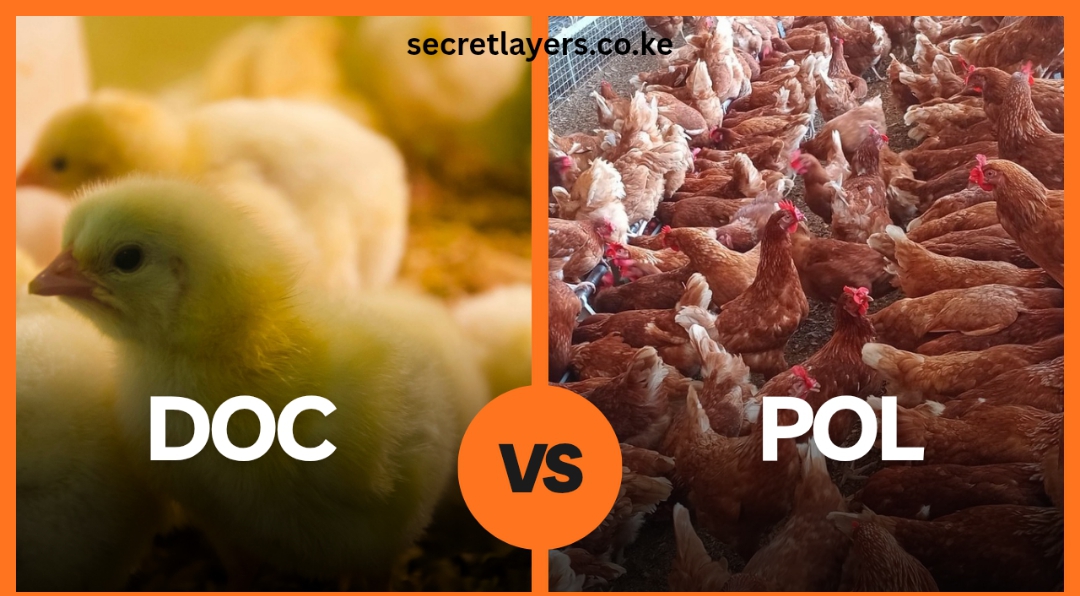
Day old chicks vs Point of lay birds
4. They Offer Control Over Your Business
Day old chicks give me full control over my business. I choose when to stock, how to brood, what to feed, which vaccines to use, and how to raise my flock.
You can’t do that with point of lay birds.
What if you want to stock next month, but your supplier’s birds are still three weeks old? You wait. You also don’t control how they brooded, fed, or handled those birds.
Big layer poultry farms don’t buy point of lay birds. They all buy day old chicks and raise them themselves. Why? Because control is everything. Even cost control.
Plus remember, the seller wants profit. If their feed prices were high, they’ll pass that cost to you.
Control your business if you want to scale your poultry farm.
5. Profitability
Day old chicks are simply more profitable than point of lay birds. The only advantage point of lay have is quick cash, which doesn’t last.
With day old chicks, you control your production cost from the beginning. With time, your brooding becomes effective, mortality stays low, your cost stays down, and you get maximum production from your layers.
This results in: – More eggs – Better profits – Predictable performance
Something that is hard to achieve with point of lay birds because the foundation is out of your hands.
And if you want, you can even sell your own point of lay birds later and profit from your skills. I’m not saying you should—but you can.
6. Fun
Lastly, day old chicks are fun. They’re like babies—many babies. You get them on day one of life and you raise them to maturity. They don’t get married, but they lay eggs. Hallelujah!
By the way that’s normal😅
The sad part is selling them off as ex-layers.
And Fun is part of our Secret Layers core values.
If you’re not fun, buy point of lay birds.
Those are the six reasons why I chose day old chicks and point of lay birds. They give me control, the ability to scale, and I enjoy doing it.
Let me know in the comments what you will choose for your farm—DOC or POL—and why. You might have better reasons, and I’d love to know.
If brooding is the main challenge stopping you from choosing day old chicks, get this Free Layer Poultry Farming Guide and I’ll send you a Free Brooding Guide next.
Ludwig Wittgenstein “The limits of my language mean the limits of my world.”
You can’t operate expertly in a field if you don’t understand the words that define it. This is everything you should know about layer chicken, layer poultry farming and the business of layers. The list will be updated every week with new information. Please learn. Layers – Adult hens raised primarily for egg production. In layer poultry farming, layers are the backbone of your egg business, providing consistent daily eggs once they reach maturity.
Pullets – Young female chickens, usually under 20 weeks old, that have not yet started laying eggs. Pullets are the future layers of your flock.
Day-Old Chicks (DOCs) – Newly hatched chicks, only a day old. Farmers buy day-old chicks to rear them into pullets or point-of-lay birds for egg production.
Point of Lay (POL) – Birds that are about 16–20 weeks old and ready to start laying eggs. Point-of-lay hens are ideal for farmers who want to begin egg production quickly.
Feeder – A container or tray used to provide feed to your birds. Using the right feeder in layer poultry farming ensures minimal feed wastage and healthy growth.
Drinker – Equipment that supplies clean water to chickens. Proper drinkers are crucial for layers’ health and optimal egg production.
Brooding – The process of keeping chicks warm, usually with a heat source, during their first few weeks. Brooding is critical to prevent chick mortality.
Incubator – A machine used to hatch eggs artificially by maintaining the right temperature and humidity. Incubators allow farmers to hatch chicks without using a broody hen.
Mortality – The number of birds that die within a flock over a given period. Low mortality rates indicate good management in layer poultry farming.
Layer Mash – A balanced feed specially formulated for laying hens to maximize egg production and quality. Layer mash provides the nutrients needed for strong shells and healthy layers.
Bird – A general term for chickens, hens, or roosters in your flock. In layer poultry farming, the term usually refers to your egg-laying hens.
Feed to Egg Conversion Ratio (FCR) – A measure of how efficiently a layer converts feed into eggs. Lower FCR means better efficiency and higher profitability.
Ex-Layers / Spent Layers – Hens that have completed their peak laying period and are no longer productive. Farmers often sell them for meat or dispose of them responsibly.
Debeaking – A management practice where part of a chicken’s beak is trimmed to prevent feather pecking or cannibalism. Debeaking helps protect your flock in crowded layer farms.
Culling – The process of removing weak, sick, or unproductive birds from the flock. Culling ensures only healthy layers remain for maximum egg production.
Litter – Bedding material, like wood shavings or straw, used on the poultry house floor. Proper litter management keeps your birds healthy and reduces disease risk.
Cages – Enclosures used to house layers, especially in commercial layer poultry farming. Cage systems help manage feed, water, and egg collection efficiently.
Newcastle Disease – A highly contagious viral disease that affects chickens, causing respiratory issues and high mortality. Vaccination is critical to protect your flock.
Infectious Bronchitis (IB) – A viral disease in poultry that affects the respiratory system and egg production. Proper biosecurity and vaccination reduce the risk.
Marek’s Disease – A viral disease in chickens that causes tumors and paralysis. Vaccinating day-old chicks helps prevent Marek’s in your flock.
Deworming – The process of giving chickens medication to remove internal parasites. Regular deworming keeps your layers healthy and improves feed-to-egg efficiency.
Gumboro (Infectious Bursal Disease– A viral disease affecting young chickens, weakening their immune system. Vaccination protects your flock and supports healthy layer development.
Starter Mash – A high-protein feed for day-old chicks to ensure healthy growth in the first few weeks. Starter mash is the foundation for strong pullets.
Grower Mash – Feed given to pullets after the starter stage but before they begin laying eggs. Grower mash ensures proper growth and readiness for point-of-lay.
Free Range – A system where chickens can roam outdoors for part of the day. Free-range layers often produce healthier eggs and can command a premium price.
Pasture Raised – Chickens raised primarily outdoors on pasture with access to insects and grasses. Pasture-raised layers provide high-quality, nutrient-rich eggs and enjoy better welfare.
And in this post, I’m going to tell you why I’m going to add value to my eggs — and why I you should too. Hopefully you’ll see what I see in value addition and be inspired to do more.
Eggs value addition can transform a normal poultry farm into a highly profitable agribusiness. Because most farmers only sell raw eggs, value-added products immediately set you apart.
Additionally, the process unlocks better markets, higher margins, and long-term stability for your layer poultry farming business.
1. Value Addition Helps You Make More Money
For example, a tray of eggs sells for Ksh.350–500. However, that same tray can produce five bottles of 350ml liquid eggs. Each bottle sells for around Ksh.350 (2020 pricing)
Therefore, one tray becomes Ksh.1,750 instead of Ksh.500.
And you get a decent profit percentage after you deduct the costs.
Would you want 10% of Ksh.1750 per tray or 10% of Ksh.500?
Moreover, this simple shift allows you to increase profits without buying more chickens. Farmers who embrace eggs value addition often discover new income streams that keep their farms stable throughout the year.
2. Value Addition Allows You To Offer More Quality And Safety
An example of dried eggs(Egg powder) Perfect for bakeries.
Raw eggs spoil quickly, usually within 30 days. Meanwhile, pasteurized liquid eggs last much longer and reduce contamination risks like salmonella. Consequently, bakeries, restaurants, hotels, hospitals, and institutions prefer them.
Egg powder goes even further. It supports pharmaceutical companies, food manufacturers, and other large industries. Because these markets value consistency, they become reliable buyers. This level of quality is difficult to achieve without eggs value addition, and customers appreciate the difference.
3. Value Addition Keeps Competition Low
Everyone sells table eggs. However, very few farmers produce liquid eggs, egg powder, or premium processed products. As a result, you enter markets with almost no direct competition. Early adopters benefit from higher demand, stronger pricing power, and better visibility.
Eventually competition may grow, but farmers who start now position themselves as leaders long before the rest join.
4. Value Addition Attracts Better Customers
Cheap products usually attract difficult customers. Premium products, on the other hand, bring in professional clients who value quality and understand pricing. Consequently, you begin working with bakeries, caterers, institutions, supermarkets, and manufacturers.
These customers buy in bulk, pay promptly(if not, their terms are favourable), and remain loyal. Since they prefer stable suppliers, your revenue becomes more predictable.
5. Value Addition. Creates Deep Fulfilment And Purpose
Farmers who practice eggs value addition often experience a stronger sense of purpose. Imagine supplying powdered eggs to companies or delivering safe liquid eggs to marginalized communities. Even better, imagine employing dozens of people because your processing unit keeps expanding.
All these achievements create fulfilment because your poultry farm begins to serve a larger purpose. Impact grows alongside income.
6. Value Addition Is More Fun
New challenges make the farming journey more enjoyable. Innovation brings learning, creativity, and growth. Because value addition involves testing, improving, and building new products, every step becomes exciting.
Even difficult days feel meaningful when you are building something bigger than a tray of eggs. Fun is a powerful motivator, and value addition brings plenty of it. And as you know fun is one of the core values of secret layers.
If it’s not fun we won’t do it – just like Sir Richard Branson says.
If you want support as you begin your eggs value addition journey, register for my Regular Layer Chicken Digest tips and get a Free Layer Poultry Guide.
You’ll get practical tips, strategies, and business insights that help you grow a profitable, resilient, and impactful poultry farm.
You’re probably wondering which is more profitable between day oldchicks and point of lay birds. Every farmer has an opinion, and you’ve likely heard many. Today, let’s settle this once and for all.
Before we start, to get the most out of this post, read this guide first:
This will help you decide which option suits your farm best.
In this post, we’ll compare day old chicks (DOC) and point of lay (POL) birds, looking at their advantages and disadvantages. By the end, you’ll know which one fits your goals — whether you want to learn, save time, or make quick profits.
1. Learning Opportunity
Raising day old chicks gives you a valuable learning experience that point of lay birds do not. Starting with DOC means you learn everything — brooding, feeding, vaccination, and general poultry management. You’ll understand your birds from the first day until they start laying eggs.
On the other hand, buying POL hens skips this stage. You get birds ready to lay, but you miss the practical lessons that build your confidence as a poultry farmer.
If you want fast cash, POL may suit you. However, if you want long-term mastery, DOC offers better training and experience.
2. Time Investment
Raising day old chicks takes more time compared to point of lay birds. With DOC, you must care for them for around 18 weeks before they start laying. Those first 5 months are the most crucial and demanding in a bird’s life.
Meanwhile, POL hens save you that time. Since they’re already mature, they can start laying eggs within a week or two after purchase. Therefore, you begin earning faster, which is ideal for farmers focused on quick returns from their egg production business.
3. Skills Required
Handling day old chicks requires more skill than managing point of lay hens. Brooding demands knowledge of temperature control, feed management, and a proper vaccination schedule for layers. Any mistakes at this stage can lead to high chick mortality.
In contrast, POL layers need fewer technical skills. You mainly feed them, maintain clean housing, and continue a few vaccinations. This makes them suitable for beginners or part-time poultry farmers who have little experience.
Day old chicks vs Point of lay birds
4. Cost Comparison
At first glance, buying point of lay birds seems expensive. In 2025, day old chicks cost around Ksh.150 each, while point of lay birds range between Ksh.800 and Ksh.1,500 depending on the age and seller.
However, when you consider the total cost of rearing DOCs — feed, brooding equipment, electricity, and vaccines — the expenses can add up. Raising them to the point of lay costs much more than buying ready-to-lay birds. So, while POL looks pricey upfront, it can save you time and early-stage costs.
5. Profit And Return Potential
The return potential for day old chicks can be higher once you master your system. Initially, it seems easier to buy point of lay hens and start earning immediately. Yet, experienced farmers know that once you perfect your brooding and reduce mortality, profits from DOC can surpass those from POL.
That’s because you can grow your own chicks, sell some as point of lay to other farmers, and even brood chicks for clients at a fee. These extra income streams make DOC a strong long-term business strategy.
6. Risk Level
Every poultry venture has risks. With day old chicks, the main risk is high mortality during brooding. If you lack experience or proper housing conditions, losses can occur quickly.
On the other hand, point of lay birds come with hidden risks. You may not always know their real age, vaccination history, or overall health status. If you buy from unverified suppliers, you risk bringing diseases to your farm. Always source your POL hens from trusted, certified farms to avoid these issues.
7. Sourcing And Availability
Sourcing day old chicks is generally easier. Kenya has many verified hatcheries supplying healthy DOCs every week. You can book and collect your chicks without much hassle.
However, finding reliable point of lay birds can be stressful. You may need to buy from different farmers to reach your desired number. That process takes time, increases risk, and sometimes affects flock uniformity — an important factor in layers egg production.
8. The Fun Factor
If it’s not fun, we’re not doing it — that’s one of our core values at Secret Layers. Raising day old chicks is much more rewarding and exciting than buying point of lay birds. Watching your chicks grow from tiny neonates to full layers gives unmatched satisfaction.
For farmers who enjoy seeing results from their hard work, DOC farming brings more joy. But if you prefer less hustle and instant results, POL might suit you better.
9. Business Opportunity (Bonus)
There’s a growing business opportunity in point of lay production. Many farmers buy day old chicks, raise them to POL, and then sell them at a profit. Others brood chicks for clients for a fee, turning their poultry knowledge into an extra income stream.
Therefore, whether you choose DOC or POL, the key is to plan your farm as a real business, not just a hobby.
Both day old chicks and point of lay birds can be profitable depending on your goals, experience, and resources. Ifyou want to learn and build a long-term business, start with DOC. But if your priority is fast income with minimal effort, go for POL.
I’ll soon share a detailed post on what I personally chose — and why. Watch out for it!
Get my Free Layer Poultry Farming Guide here👇🏿
Just register and I’ll send it straight to your inbox.
Brooding chicks is the make-or-break stage for any poultry farmer. Get it wrong, and you could lose over 80% of your flock — that’s future profit gone. Get it right, and mortality drops to below 5%, which is the accepted standard in poultry farming.
If you’ve ever struggled with brooding or just want to perfect your skills, this guide is for you. You’ll learn the 8 essential brooding principles that ensure healthy chicks and minimal losses — from temperature control to security.
I’ve referenced layers in this post because that’s all Secret Layers is about. But, whether you’re into layer poultry farming or broilers, these principles apply to all. Only slight timing and quantity adjustments differ. Let’s dive in. 🐥
1. Temperature Regulation
Temperature control is the heart of brooding chicks. It ensures your birds stay comfortable, active, and healthy.
Start your brooding temperature at 28–30°C on day one, then reduce by about 2°C every week. However, always follow your hatchery’s specific temperature guidelines — some breeds may vary.
Monitor temperature daily using a thermometer. But also read your chicks’ behavior:
Crowded near heat source: Too cold — increase heat.
Far from heat source: Too hot — reduce heat.
Evenly spread: Perfect temperature.
Consistent temperature management during the brooding period prevents heat or cold stress and sets the foundation for strong growth.
Master your brooding. Master your your profits. See the various aspects of brooding present in this setup.
2. Lighting
Light is more than visibility; it affects chick behavior and growth. During the first week, provide 24 hours of light to help chicks find feed and water easily. This continuous light encourages constant feeding, which supports rapid growth.
As they grow, gradually reduce light to about 18 hours a day by the end of the brooding period. However, avoid bright or harsh lighting — it may trigger feather pecking or cannibalism.
Proper lighting promotes calm, active feeding behavior and balanced growth — vital for your chicks.
3. Feed And Water
In chicken farming, feed and water are everything. Healthy chicks depend on consistent access to clean water and quality feed.
Keep feeders and drinkers filled and refreshed regularly. Chicks need feed available at all times, especially during the first few weeks. As they grow, increase the feed amount gradually to match their size and appetite using supplier standards.
Use starter mash from trusted suppliers and avoid cheap, low-quality feeds that may harm your birds’ long-term production. Feed too little and they’ll starve or weaken; feed too much and you’ll waste money or cause obesity.
For water, remember: if you can’t drink it, don’t give it to your chicks. Provide clean, fresh water at all times to prevent disease.
4. Disease Management
Diseases are the most unpredictable threat in poultry farming. They strike without warning and can wipe out an entire flock in one day. To protect your chicks, you must combine vaccinationand biosecurity.
Vaccination
Follow a proper vaccination schedule from your hatchery or local vet. Vaccines are for prevention, not cure. Therefore, vaccinate even when your chicks appear healthy.
Biosecurity
Prevent disease entry and spread by enforcing strict hygiene:
✅Disinfect before entering the brooder.
✅Limit access to authorized personnel only.
✅Clean feeders and drinkers daily.
✅Control pests like rats and mites.
✅Isolate and treat sick birds immediately.
Following these steps reduces disease risks and keeps your flock safe and productive.
I’ll publish a post on all the biosecurity measures to enforce on your farm soon.
5. Litter Management
Litter provides warmth and comfort — but if poorly managed, it can kill your chicks. Keep it dry and fluffy, removing wet or caked areas regularly. Wet litter breeds germs and raises ammonia levels, which can harm chicks’ respiratory systems.
The brooding period for layers lasts about six to eight weeks, so complete litter changes may not always be necessary. However, if it becomes too wet or muddy, change it immediately. Regularly turning the litter keeps it dry and healthy.
Proper litter management means cleaner air, fewer diseases, and happier chicks.
6. Spacing
Did you like high school? Remember how good it felt when you finally left? Your chicks feel the same when given enough space.
Cramped brooders cause stress, slow growth, and higher mortality. Ensure adequate space per chick, depending on your heat source and brooder design. As your chicks grow, expand the brooder to maintain comfort.
Overcrowding increases competition for feed and water, while too much space wastes litter and heat. The goal is balance — efficient use of space that keeps chicks active and comfortable.
7. Ventilation
Brooders hold many chicks, producing heat, carbon dioxide, and ammonia. Poor ventilation traps these gases and endangers your flock.
Ensure your brooder is well-aerated to allow fresh air in and remove stale air. During hot days, open windows for natural airflow. However, cover them at night or when it’s cold to prevent chills.
If you can smell ammonia or feel stuffiness, ventilation is poor. Good air circulation keeps chicks healthy and reduces respiratory stress.
8. Security
Finally, protect your chicks. Not from disease — but from predators and theft.Rats, snakes, cats, dogs, and even people can destroy your hard work overnight.
Secure your chicken house with strong materials, close holes, and maintain clean surroundings. Use dogs for protection, cats for rodent control, and, if possible, simple CCTVs or motion lights for extra security.
Without proper security, all your other efforts in brooding chicks can go to waste.
The 8 Brooding Principles Recap
1️⃣ Temperature Regulation – Maintain proper warmth and observe chick behavior.
2️⃣ Lighting – Adjust light hours for feeding and calm growth.
3️⃣ Feed & Water – Always provide clean water and quality feed.
4️⃣ Disease Management – Combine vaccination and biosecurity.
5️⃣ Litter Management – Keep litter dry, clean, and well-turned.
6️⃣ Spacing – Expand brooder area as chicks grow.
7️⃣ Ventilation – Ensure fresh air and control ammonia buildup.
8️⃣ Security – Protect chicks from predators and theft.
And that’s it — your 8 brooding principles for raising strong, healthy chicks. Follow them and you’ll never fear the brooding period again.
No more risky business of buying point-of-lay hens just because brooding feels hard. You’ll raise your own chicks, grow them into profitable layers, and keep every bit of the profit yourself.
Then you can even sell quality Point of Lay birds of you want to😅
Keep learning, keep improving, and always innovate — that’s how you grow in layer poultry farming.
>Remember ; Master your brooding. Master your profits.
Get my Free Layer Poultry Farming Guide and receive regular LayerChicken Digest tips straight to your inbox.
It was one of those cold mornings that make you hug your jacket tighter. Niss woke up refreshed. She’d slept deeply, peacefully. Nothing special had happened, but she felt calm inside — ready for another day on her layer poultry farm.
She went to her storage room to measure feed for her 22-week-old layer chickens. The morning was quiet.Too quiet.
Even as she neared the chicken house, not a single cluck or flutter broke the silence.
> “They must have slept well… just like me,” Niss thought with a smile.
But her smile faded. Her birds were never this quiet during feeding time. Her heart began to race.
A Silent Chicken House
After disinfecting her shoes, she opened the door…..
and froze.
Inside, her chickens lay still on the litter. Not one moved. Not one made a sound.
She felt dizzy. Her chest tightened. She reached for one bird — cold. Another — the same. All gone.
623 layer chickens. Silent. Dead.
Tears rolled down her face. She had done everything right — all vaccines, feeding schedules, and hygiene routines. There hadn’t been any sign of a disease outbreak nearby.
When Everything You Did Right Still Fails
Niss called the vet, her voice shaking. He arrived quickly, calm but serious. > “Did you notice any signs of disease?” he asked.
“No,” Niss said. “They were fine last night. Though they didn’t finish their feed… and one bird looked sleepy, but it woke up.”
The vet took a few samples for postmortem testing and left her with words she would never forget.
Lessons No One Talks About
One day your chicken might all die. Not because you did something wrong, but because it just happens sometimes. You have to be ready so you don’t give up.
✅ Diseases still attack even when birds are vaccinated.
✅ Vaccines are not 100% effective — always watch your flock closely.
✅ Isolate any sick-looking bird and call a poultry vet immediately.
✅ Never eat dead birds — you don’t know what killed them. It’s not safe for you.
✅ Sometimes, even when you do everything right, bad things just happen.
That day broke Niss’s heart. But it also reminded her that farming isn’t just about feed and vaccines. It’s about expecting for the worst and being ready, patience, discipline, and resilience.
Because sometimes, you can do everything right… and still lose. What matters is what you do next.
💬 Your Turn
Have you ever lost birds suddenly on your farm? Share your experience in the comments — your story might help another poultry farmer avoid the same pain.
👉 Get a Free copy of my Layer Poultry Farming Guide and regular Layer Chicken Digest Tips here👇🏿
If someone gave you Ksh.50,000 today, what would you do with it?
This is how I would turn Ksh.50,000 (approximately $385) into a thriving business through the NYOTA Program Kenya.
The government of Kenya, through the NYOTA Program, is offering grants and training to empower Kenyan youth. It’s an amazing opportunity for those who qualify. Unfortunately, I don’t meet the criteria for application, but if I did, here’s exactly how I would use the funds to build a sustainable business.
Not something lifeless or short-term, but a venture with a real vision of growth.
It’s sad that many businesses started through such government programs die off within a year. Evidence from the earlier Youth Enterprise Development Fund (YEDF) shows that only a small percentage survive past five years.
That’s why I decided to share how I would personally use the NYOTA grant and the strategies I would apply to make the business last. I hope you’ll find value in it and maybe borrow a few ideas for your own plan.
By the way, congratulations if you received the grant!
Step 1 : Decide And Commit To One Business
The first thing I would do is make a clear decision and commit to one business. I would choose layer poultry farming — and I have good reasons for it which you can check here👇🏿
It’s something I’ve been studying and researching for a long time, and that focus gives me an edge.
There are many profitable opportunities out there. However, without clarity, it’s easy to end up confused and scattered.
So I would decide, commit, and lock in. No broilers. No goats. No hotel. No forex.
Layer poultry farming only.
Step 2 : Learn
Before starting, I would spend one to two weeks learning everything about layer poultry farming. That means not just how to raise the birds, but also how to run the business side of things.
I’d study topics such as:
✅Brooding
✅Feeding
✅Disease management
✅Marketing and sales
✅Branding and negotiation
In addition, I would visit established layer farmers and learn directly from their experiences. I’d talk to egg traders — both wholesalers and retailers — to understand the egg business better.
I’d also reach out to poultry experts for practical advice.
Meanwhile, I would get a reliable internet connection for a week and binge-watch YouTube videos about layer poultry farming in Kenya. I’d read blogs, success stories, and mistake lists.
Of course, I would also check X, Facebook, and TikTok pages of farmers to see what works for them.
Secret Layers is already a good place to start for this kind of information — both technical poultry farming and business.
To help with this learning phase, I have a Free Layer Poultry Farming Guide you can get here 👇🏿
Another skill I would add is contentcreation. There are countless free online resources on how to make engaging and educational farming content.
After one or two weeks, I wouldn’t be an expert yet, but I’d know enough to start my layer farm confidently.
Step 3 : Start The Farm
Layer Chicken in a poultry house. While Ksh.50k won’t get you this at first, with a long term business strategy you can get here.
Next, I would begin the actual farm setup. My plan would be to start with 50 layer chickens. That’s enough to make sense as a business but still manageable for a beginner.
However, there’s one issue. Starting a 50-bird layer poultry farm in Kenya costs around Ksh.91,000, according to my recent research (see the cost breakdown here👇🏿
I have a plan — and I’ll share how to make it work. Just trust me and follow the logic to the end.
I would follow the exact process outlined in my Free guide to set up the farm and get my chicks started.
At this point, the farm would be running.
Now, layer chickens take about four and a half months before they begin laying eggs. That means no cash flow for about five months.
So what next?
Step 4 : Create Content Around My Farming Journey
During this waiting period, I would focus on creating content. I’d document my entire journey from day one — every success, failure, and lesson learned.
Don’t frown yet. Maybe if I say “teach people what I’m learning,” it will sound better. But yes, I’d share my journey publicly.
This would include content across YouTube, TikTok, Facebook, X, and Pinterest. However, I’d focus mainly on the three I use most — Facebook, X, and YouTube.
This approach is exactly how Secret Layers started — by teaching and documenting.
For instance you can watch the YouTube video of this blog post here👇🏿
Setting up social media accounts is free. The only small cost would be basic content tools like a ring light, tripod stand, and microphone — not more than Ksh.3,000 ($23).
There are two main reasons for creating content:
1. To build a brand around my farm. The content would serve as my marketing and branding engine.
2. To create a potential income stream. In time, monetizing these platforms could bring in more money to grow the farm further.
At that point, I’d have two things running – a real farm and a growing online brand.
That’s the foundation of a long-term business.
Now The Secret To Make My Whole Plan To Work
Step 5 : PartnerWith Another Beneficiary
Now, remember that the cost of starting the 50-bird farm is Ksh.91,000, but the grant is only Ksh.50,000.
Here’s the secret to make it work.
I would partner with another NYOTA Program beneficiary. Together, we would combine our grants for a total of Ksh.100,000.
The NYOTA Program includes a training period before the funding phase. I’d use that time to identify a serious, like-minded partner — preferably someone from my area, maybe a friend, or someone who shares my farming vision.
Finding the right partner isn’t always easy, but it’s the smartest way to make this plan possible. And I would treat it like my life depended on it.
That’s my blueprint for how I would use the NYOTA Program grant to build a sustainable and profitable business.
You don’t need millions to start. With focus, learning, and creativity, you can turn Ksh.50,000 into something that grows year after year.
If you’ve received the NYOTA grant, congratulations again. Use it wisely, and build something that will last beyond five years.
💡 If you want to start your own layer poultry business..
Get my Free Guide: 6 Steps to Start a Profitable Layers Poultry Farm here👇🏿
And I’d love to hear your thoughts — what would you do with your Ksh.50,000 NYOTA grant?
Niss had just sold off her first batch of ex-layers. It had been a successful run — her birds maintained an impressive 80% laying rate the entire period. For a first-time farmer, that was nothing short of amazing.
Now, she was taking a one-month break before bringing in her next batch. The chicken house needed time to dry after disinfection — an essential step to prevent disease transmission to new chicks.
But that also meant no income for a whole month.
She didn’t have enough savings to build another chicken house. And for a moment, she wondered, What will I do now?
Voices In The Dark
That night, around midnight, Niss was woken by faint voices outside her house. A woman’s voice. It sounded like she was talking to herself. “Is that the village witch?” Niss thought, half terrified.
She sprang out of bed and crept toward the door. As she reached the hallway, the voices grew louder — but now there were two people.
Her heart pounded hard, pumping litres of blood to her legs, ready to sprint for her still-short dear life.
Then it hit her. Wait. That’s coming from my daughters’ room.
She froze. Are they—? She didn’t want to finish that thought.
Listening closer, she realized the voices were indeed her two daughters.
When she asked why they were awake at midnight, their answer confused her even more. Something about a “masterclass” and “techniques” and “digital something.”
Niss didn’t get it — not that night. She went back to bed, uneasy but curious.
The Morning Revelation
By morning, after another round of questioning, she finally understood: Her daughters had been attending an online masterclass on professional knitting.
That surprised her — but it also sparked a thought. What if I did the same?
What if she taught others what she already knew so well — layer poultry farming?
She had seen people online making money teaching what they knew. Some even lived lavishly — nice cars, big houses, flashy lifestyles.
Before she could dream too far, her daughters interrupted her thoughts. > “Mama, stop there,” they said. “That internet life is a lie. But you can make money from YouTube — not to buy a sports car, but enough to cover slow months like this.”
That was all Niss needed to hear.
“Then show me how,” she said eagerly. “I want to start right now!”
Her daughters laughed.
> “Chill, Mama. Take it slow. Remember how you prepared before starting your layer farm? That’s what you need to do for this too.”
They were right.
Before she started her poultry business, Niss had done months of research — visiting farms, asking questions, taking notes. Skipping that process now would be against her own rules.
She had to learn again — this time, about content creation and online education.
The Turning Point
That morning, Niss made up her mind. She would teach poultry farming online, just like she raised her chicks — step by step, carefully, consistently.
She would share her knowledge through videos, blog posts, and stories that help other farmers grow.
Maybe it would work. Maybe it wouldn’t. But she was determined to earn that extra income — while teaching others the craft she loved.
Why Don’t You Try It?
If you’re a farmer, you probably have mountains of knowledge and experience others would love to learn from.
And sometimes, there are slow months — when you’re between flocks, waiting for the next batch, or the market is just quiet.
That’s when creating content can become your second source of income. You teach, you inspire, and you make a little extra money — all while building your farm into a loveable, trusted brand.
So why not try it yourself? Start small. Start real. And remember, every great farm — and every great brand — starts with a single story.
Get a Free copy of my Beginner Layer Poultry Farming Guide here.